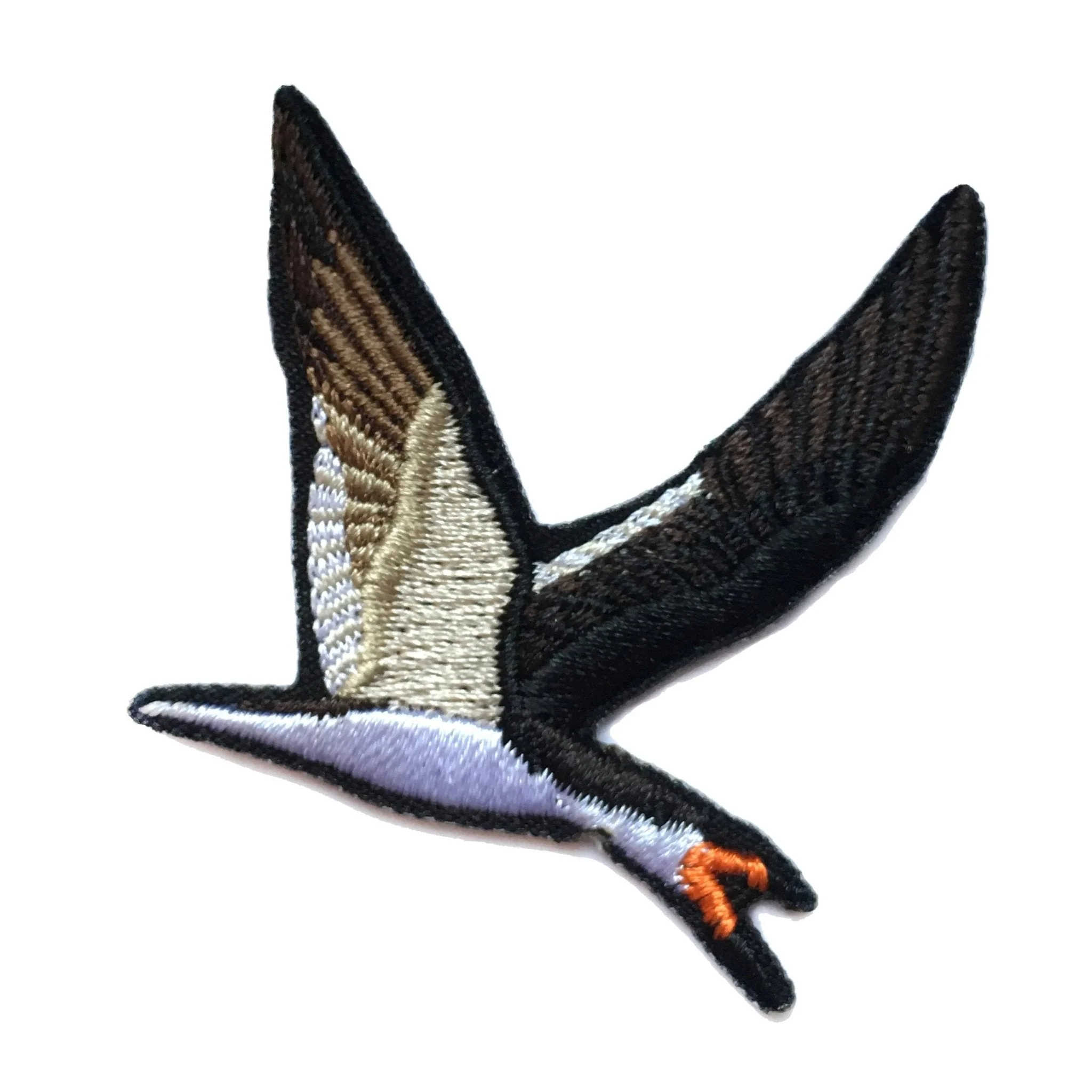
Black Skimmer Patch
#10 Black Skimmer
The unmistakable Black Skimmer gets its name from its unique manner of feeding. They fly low over waves, with their longer lower mandible knifing through the water and snapping shut once it finds a fish. They’re agile flyers, and in groups often turn and glide in harmony.
Skimmers lay their eggs directly on the beach, which makes them vulnerable to human disturbance, predation, and weather. In New York State, where only three nesting colonies remain, NYC Audubon is working with city and state agencies to protect their breeding habitat and band chicks every summer.
Product Information
Product Information
Shipping & Returns
Shipping & Returns
Description
#10 Black Skimmer
The unmistakable Black Skimmer gets its name from its unique manner of feeding. They fly low over waves, with their longer lower mandible knifing through the water and snapping shut once it finds a fish. They’re agile flyers, and in groups often turn and glide in harmony.
Skimmers lay their eggs directly on the beach, which makes them vulnerable to human disturbance, predation, and weather. In New York State, where only three nesting colonies remain, NYC Audubon is working with city and state agencies to protect their breeding habitat and band chicks every summer.